
table of contents
Why User Mobile Experience is Crucial to Your Conversion Rate (and How to Improve It)
The Importance of Mobile Experience for Users
Mobile devices have become the primary way that many people access the internet. In fact, according to Statista, in 2023, 58.67% of all website traffic worldwide came from mobile devices (excluding tablets). This trend is only expected to continue in the coming years.
Percentage of mobile device website traffic worldwide from 1st quarter 2015 to 4th quarter 2023
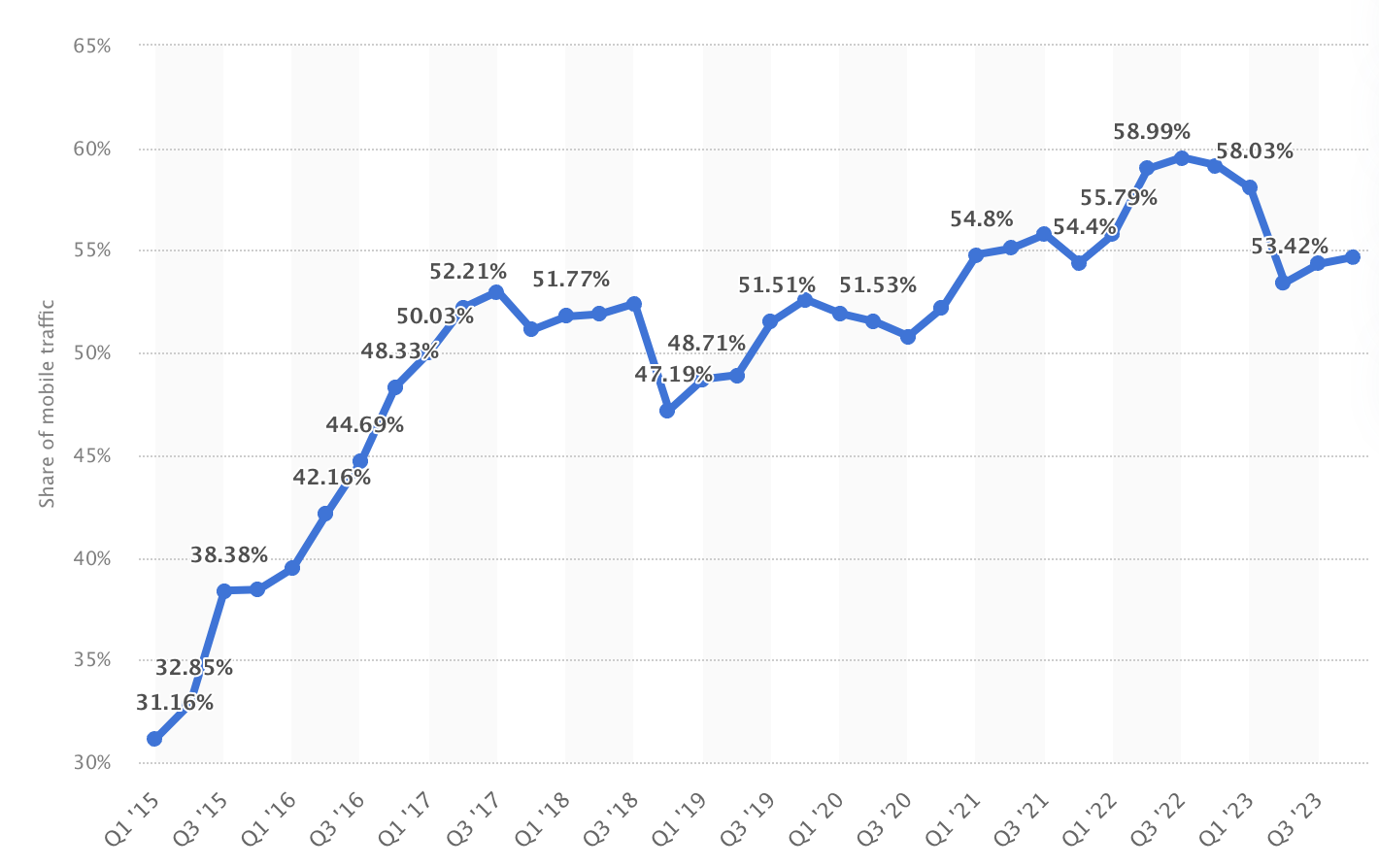
Source: Statista, 2025
Despite this, conversion rates on mobile devices tend to be lower than on desktop. This is often due to several factors, including smaller screen sizes, slower loading times, and a less intuitive user interface.
To improve mobile conversion rates, businesses need to focus on providing a seamless and user-friendly mobile experience. This means ensuring that your website is fast, responsive, and easy to navigate on a smaller screen.
Quantifying the Impact of Mobile Improvements
Improving mobile speed can have a significant impact on revenue. By calculating our mobile conversion rate, we can quantify the impact of mobile improvements and track its progress over time.
To calculate mobile conversion rate (MCR), divide the number of mobile conversions by the number of mobile visitors. For example, if we had 100 mobile visitors and 2 of them converted, the mobile conversion rate would be 2%.
No. of Mobile Conversions / No. of Mobile Visitors = MCR
We can also use the following equation to calculate the revenue generated from mobile conversions:
(Mobile Clicks x MCR) x Average Order Value = Revenue
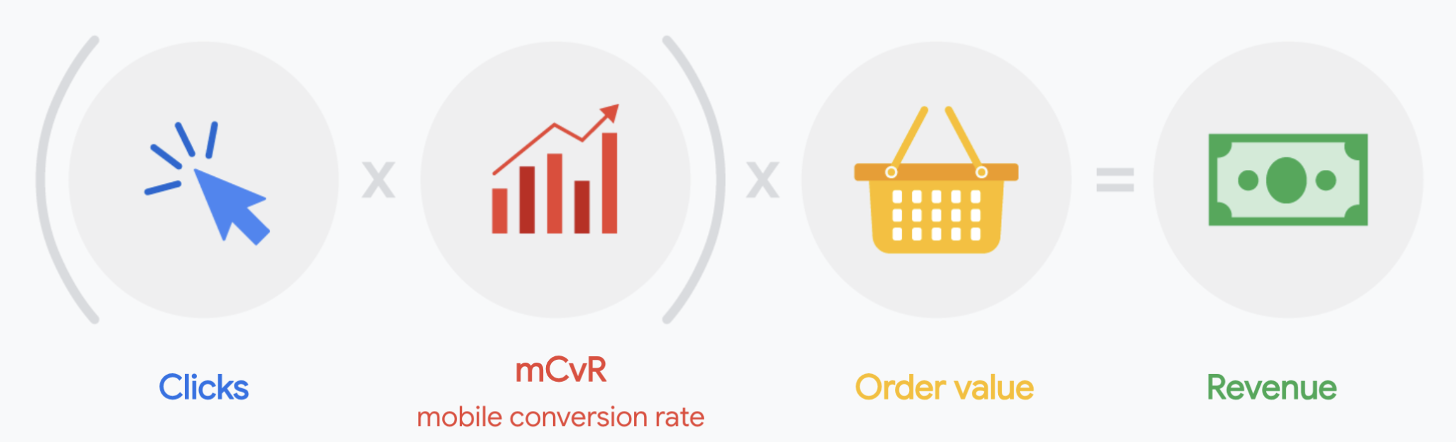
Source: Google Skillshop
Example: Small Increases in MCR
Imagine a business receives 10,000 mobile visitors each month. Let’s say the average order value is £50.
- Current MCR = 2%
Revenue = (10,000 visitors × 2% MCR) × £50 = 200 conversions × £50 = £10,000
Now, let’s see the impact of a modest increase in MCR.
- Improved MCR = 2.5%
Revenue = (10,000 visitors × 2.5% MCR) × £50 = 250 conversions × £50 = £12,500
In this example, a mere 0.5% increase in the MCR results in an additional £2,500 in revenue per month. This highlights how even small improvements in mobile conversion can have a significant financial impact.
Personalising Mobile Experience
A key strategy for improving mobile conversion rates is through personalisation. By tailoring the mobile experience to each user’s needs and preferences, we can enhance engagement and drive higher conversion rates. This can involve delivering a relevant landing page based on the user’s location, device, and browsing history.
You can also use known user signals, such as past purchases and search queries, to personalise the mobile experience. By providing users with relevant content and offers, you can increase their engagement and likelihood of conversion.
Furthermore, leveraging user-provided information can significantly enhance personalisation and streamline the user experience. This includes:
- Saved Sign-In Details: Utilising saved sign-in details to pre-fill forms and automatically log in users, simplifying the login process and reducing friction
- Simplifying Payment Process: Storing preferred payment methods and shipping addresses to expedite the checkout process
- Autofill: Enabling autofill functionality to quickly populate forms with saved information, such as names, addresses, and payment details, further enhancing convenience and speed
Deep Linking and Progressive Web Apps
Deep linking and progressive web apps (PWAs) are two other technologies that can help improve the mobile experience.
Deep Linking: Imagine you’re running a promotion for a specific product and want to send users directly to that product page within your app, this is where deep linking comes in. It allows you to create links that bypass the app’s home screen and take users straight to the relevant content. This can be particularly useful for remarketing campaigns, personalised recommendations, and improving user onboarding. By providing a more streamlined and targeted user journey, deep links can significantly improve engagement and conversion rates.
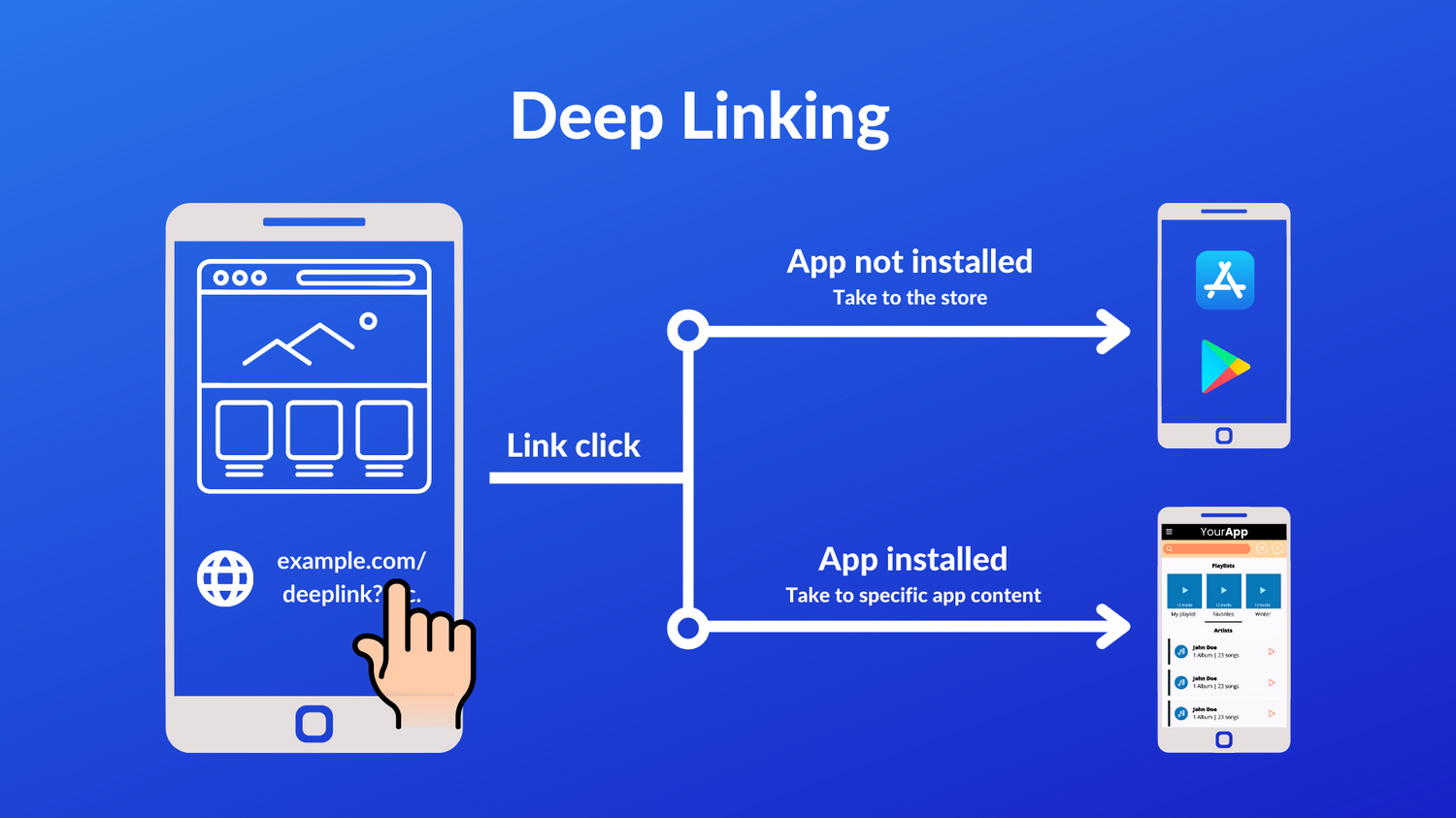
Source: Singular
Progressive Web Apps (PWAs): PWAs bridge the gap between traditional websites and native apps, offering a compelling blend of both worlds. They’re essentially websites that are enhanced to provide a native app-like experience. This means they can be accessed directly from the user’s browser, without requiring installation from an app store. PWAs offer features like offline access, push notifications, and home screen icons, making them feel like native apps. They also leverage service workers, a technology that enables background tasks and caching, resulting in faster loading times and improved performance. PWAs are a cost-effective way to reach a wider audience and provide a seamless experience across different devices.
A Note on Brand Impact
It’s also important to remember that mobile experience also matters to overall brand perception and loyalty.
A 2018 Google Study found that more than a third of smartphone users will immediately go to another company’s site or mobile app if they don’t get what they need.
People expect brands to deliver products or services that meet their needs, in a way that’s easy for them to interact with, at any time. Users reward the brands that offer great mobile experiences with higher engagement and loyalty, which translates into increased revenue.
Conclusion
Improving mobile speed is crucial for any business that wants to succeed in today’s digital landscape. By providing a fast, responsive, and personalised mobile experience, you can increase user engagement, improve conversion rates, improve brand perception and drive revenue growth.
Implementing the strategies outlined in this blog post can help you achieve your mobile conversion goals and stay ahead of the competition.
Prefer Video? Watch on Youtube
Want to Learn More About Digital Analytics?
For more digital analytics content, check out our blog on FBCLID (Facebook’s Click Identifier) and how it impacts GA4 data or How to Add a Google Ads Conversion Linker tag. If you have any questions or there’s anything else we can help with, please leave a comment below, or email contact@glowmetrics.com.
You can also stay up-to-date by following GlowMetrics on Twitter or LinkedIn or by subscribing to our newsletter (link below) for the latest tips and news in the world of digital analytics and marketing.
Don’t forget to sign up for a FREE account on our Resource Hub to access a wealth of valuable resources, including exclusive Google Tag Manager how-to videos and insights!