table of contents
The New Era of Search: Where AI Authority Meets Human Experience
When my parents were at university, the information they needed was held in the library. The hunt for information took days, as they like to remind me. A fight to beat their classmates to the limited amount of books stacked on the shelf.
Skip to six years ago when I started my undergraduate degree, a few Google searches was all it took. With this ease came the ability to browse from my desk, click through a handful of links, skim some articles, maybe fall down a rabbit hole or two.
Today, for my youngest sister who has just started her first year, the hunt for information has been distilled once more into a single moment.
More than half of Google searches now end without a single click. Answers appear instantly, distilled by AI into a neatly packaged parcel.
That shift isn’t just technological. It’s behavioural. It’s cultural.
And it’s redefining what it means for brands to be trusted, chosen, and remembered.
We’ve entered the “Zero-Click Era” where AI is both gatekeeper and curator of information, and where human experience has never mattered more.
AI Has Reshaped Search, But Not Trust
Behind every “quick answer” generated by AI tools is an astonishing amount of data being processed behind the scenes. Google now crawls many more pages per query than it did just ten years ago. ChatGPT goes even further, synthesising thousands of sites before making a single recommendation.
The outcome: users get what they want instantly.
The implication: traditional web traffic evaporates.
But an important lesson has emerged in the process.
AI may understand information, but it cannot experience your products or services.
It can tell you why it works, but cannot replicate the impact it has on someone’s life.
It can decode patterns, but it cannot sense the emotional relief in someone finally finding a solution to their skin issues or the frustration that led them through five moisturisers before discovering the right one.
This is where the modern search journey splits in two:
AI provides the facts, but humans must still provide the meaning.
The New Search Journey Is Compressed, But Not Simplified
Let’s look at one of my most recent searches, and how it might flow as a user journey:
My initial question:
“Why is my skin so dry in winter?”
Followed soon by:
“Best moisturisers for dry winter skin?”
I then started comparing brands:
“Is CeraVe or La Roche-Posay better for winter dryness?”
Not long ago, this would have been a 5-7 click journey. Today, it’s a single AI-generated answer, “Try La Roche-Posay Cicaplast Baume”, delivered to me with confident authority.
What’s changed isn’t just how people search, but who gets to influence the outcome.
Brands can no longer rely on capturing every step of the funnel.
AI now compresses the entire decision-making process into a single answer. A solution (however imperfect) for indecisive shoppers like myself.
However, to earn a place in those answers, brands must offer content that AI trusts. It needs to be factual, nuanced, and grounded in genuine expertise. But they must also recognise that users still seek something AI alone can’t offer, lived experience.
Reddit: The Trust Engine of 2025
So, if we are coining AI as the new librarian of the internet, it’s safe to say that Reddit has become its most-cited reference book.
With hundreds of millions of active users, Reddit is now a global fabric of communities built on shared interests and collective problem-solving. Whether it’s r/SkincareAddiction dissecting ingredients or r/52book to connect with likeminded bookworms, Reddit has become a place where authenticity is earned, not marketed.
Why does AI rely so heavily on it?
Simply put: Reddit does what AI cannot. It captures the nuance of real human experience, complete with its many imperfections.
On Reddit, people are raw and honest. And now, with its new Answers feature, users can get information, recommendations, discussions from real conversations and communities across all of Reddit.
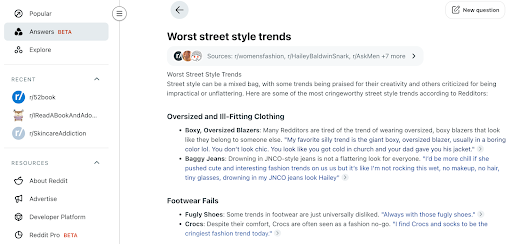
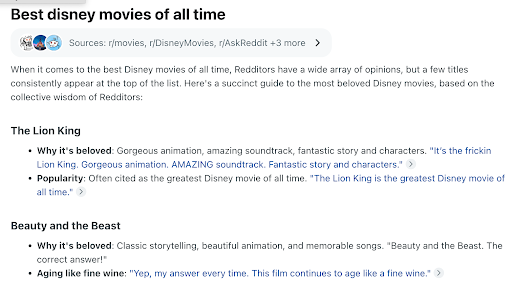
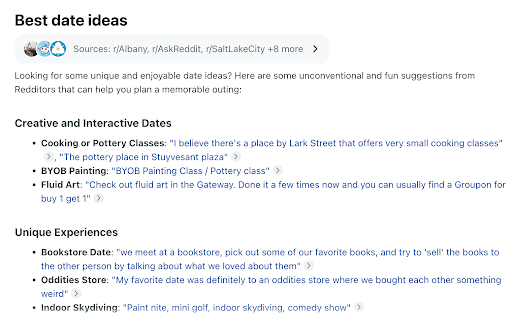
This rawness is perceived as truth. And truth, more than brand-curated, polished content, is what people are hungry for.
AI systems reflect this preference back to us. When generating product reviews or recommendations, they pull heavily from user-led discussions. Not because Reddit is flawless, but because it feels most human.
And in a world of machine-generated certainty, real human experiences have become a premium.
What Communities Reveal About Modern Influence
Reddit communities often operate independently of brands, sometimes even more powerfully.
The massive r/MarvelStudios subreddit isn’t run by Disney or Marvel. Yet it fuels speculation, shapes sentiment, and acts as an always-on focus group of millions.
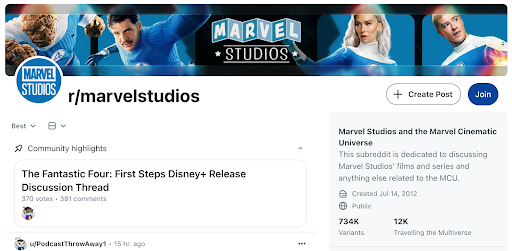
On Reddit, brands don’t control the conversation; they influence it only by being culturally relevant enough for communities to care.
On the other end of the spectrum, smaller brands like Purple have embraced community rather than fearing it. Their subreddit (which they actually own) functions as an open channel: questions, critiques, giveaways, unfiltered conversations. It’s messy. And it’s real.
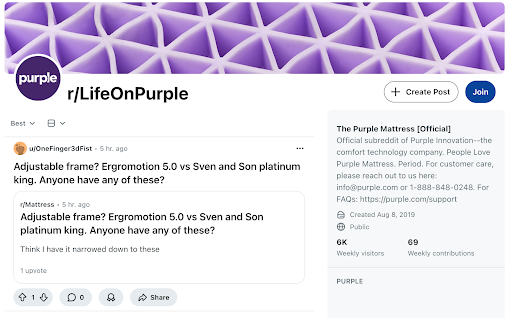
And that realness is precisely why it works. Consumers no longer want brands to perform authenticity.They want brands that can withstand authenticity.
AI Is the Gatekeeper, But Humans Are the Proof
As AI-driven search becomes the norm, the most successful brands will be those that understand the dual nature of modern trust:
AI decides what gets visibility. People decide who earns trust. That means brands must create content with two audiences in mind:
For AI:
- Information that is precise, transparent, and useful.
- Content that answers real questions. Not with marketing spin, but with depth.
For People:
- Stories, experiences, and imperfections.
- Voices that feel lived-in, not scripted or manufactured.
The strongest signals of credibility today are often human ones:
- A trusted medical expert openly sharing her background and inviting direct conversation.
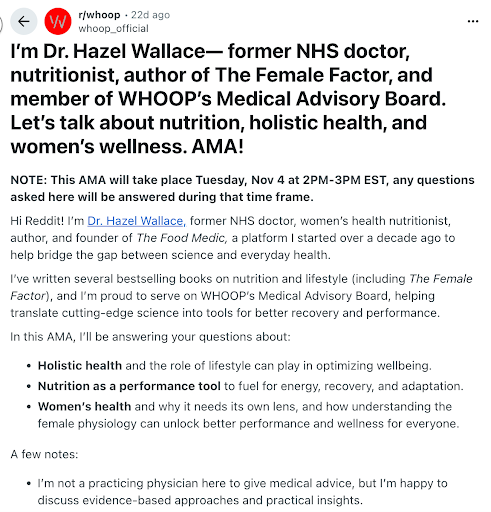
- A founder responding directly to a Reddit question
- A loyal customer sharing the nuanced reality of their journey with the brand
It’s not enough to appear in the AI summary. Brands must be able to defend that recommendation when users inevitably seek human validation. Because they still will.
How Brands Can Lead in the Zero-Click Era
The era of chasing clicks is ending. The era of earning citations is just beginning.
Brands that adapt fastest will focus on:
- Creating AI-ready content:
Clear, factual, context-rich material that models can reference confidently.
- Showing the work:
Balanced, honest storytelling.
- Investing in community:
Not through intrusive promotion, but through participation, contribution, and transparency. Showing up.
- Elevating human voices:
Subject-matter experts, internal talent, and loyal customers all shape how AI understands your authority.
- Bridging AI-People gap:
Answer the “what” with clarity, and the “why it matters” with emotion.
The Future of Search Is a Collaboration
AI delivers information faster than ever. Communities are delivering meaning more nuanced than ever.
The brands that thrive will be those that don’t see AI and humanity as competing forces, but as complementary ones. AI gives users a confident starting point. Humans give them the confidence to follow through.
In the end, people don’t want polished marketing messages. They want to hear from those who have first-hand experiences.
The future of search belongs to the brands that combine credible data with authentic human experience, and understand that visibility is earned not only in algorithms, but in communities.
Prefer Video Content? Watch On Youtube!