
table of contents
The Discrepancy Between LinkedIn’s ‘New Followers’ Metric and Actual Page Growth
Have you been using LinkedIn’s analytics to track your page’s New Follower growth, only to find yourself scratching your head when the numbers don’t quite add up? If so, you’re not alone. We recently stumbled upon an interesting discovery within LinkedIn’s analytics that sheds light on this very issue.
At GlowMetrics, we tend to track our total number of followers each month manually (spreadsheets for the win). This method has evolved into a cornerstone of our social analytics strategy, valued for its reliability. Given that numerous platforms (and data connectors) fail to furnish this metric automatically, or may even revoke it after initially providing it, our manual tracking stands as a vital safeguard, ensuring we don’t lose valuable data.
We noticed that our manually recorded follower growth didn’t align with the numbers reported in LinkedIn’s “New Follower” metric. Intrigued, we delved deeper into the platform’s follower insights to uncover the truth. According to LinkedIn, the “Total followers” metric represents the cumulative count of all-time followers since the creation of your page. This figure is updated daily, providing a snapshot of your page’s historical reach.
On the other hand, the “New followers” metric tracks the number of followers gained within the past 30 days, accompanied by a percentage change from the previous month. Seems straightforward, right?
Not quite.
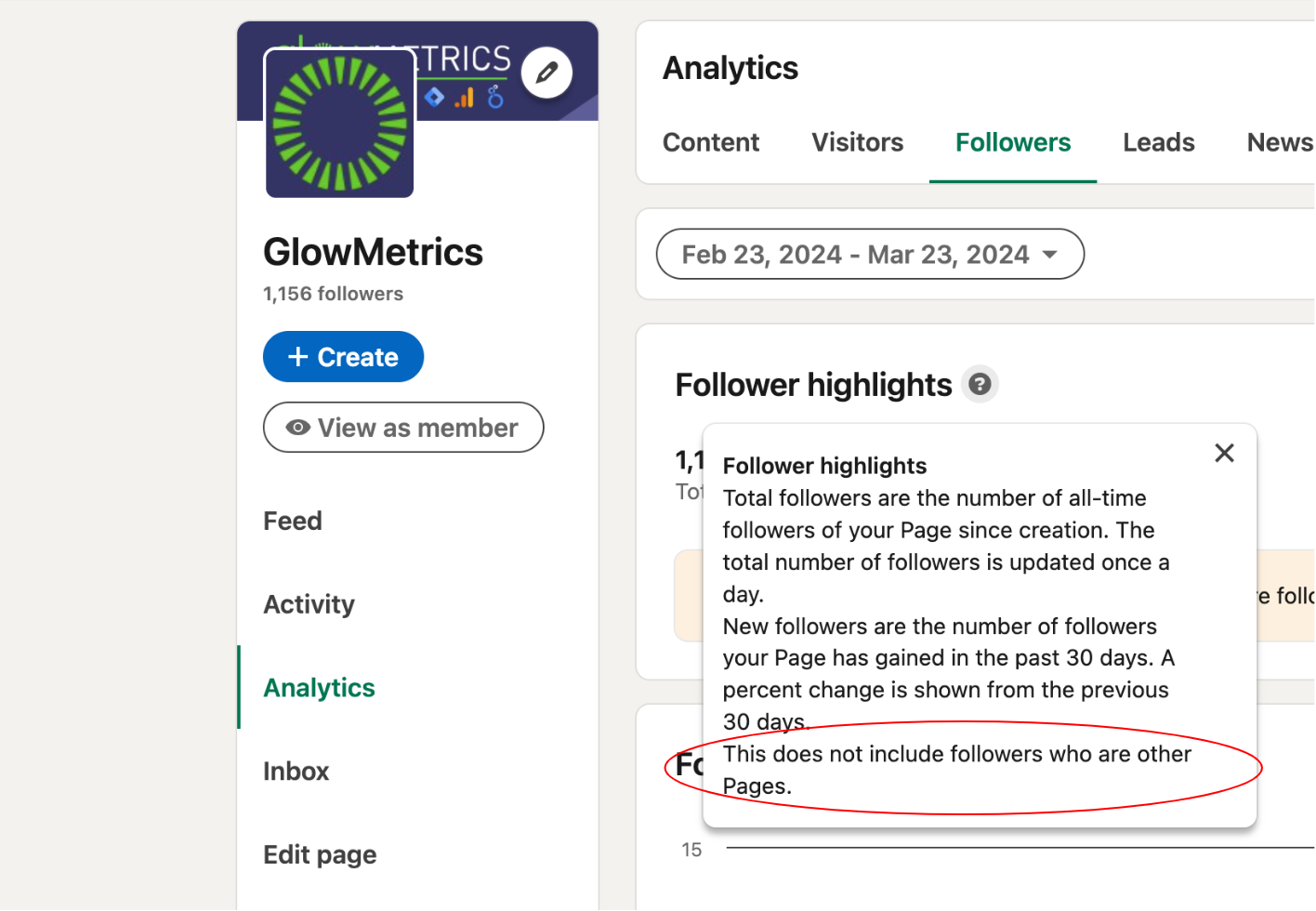
Here’s the catch: LinkedIn’s definition of “New followers” excludes followers who are other pages. In other words, if your new followers happen to be company pages rather than individual profiles, they won’t be accounted for in this metric. This revelation prompted us to consider why LinkedIn might exclude company followers from the “New Follower” metric. Upon reflection, we speculate that LinkedIn may prioritise highlighting engagement with individual professionals over organisational accounts. By focusing on individual followers, LinkedIn likely aims to emphasise the authenticity of connections and interactions, which are often more indicative of genuine engagement.